


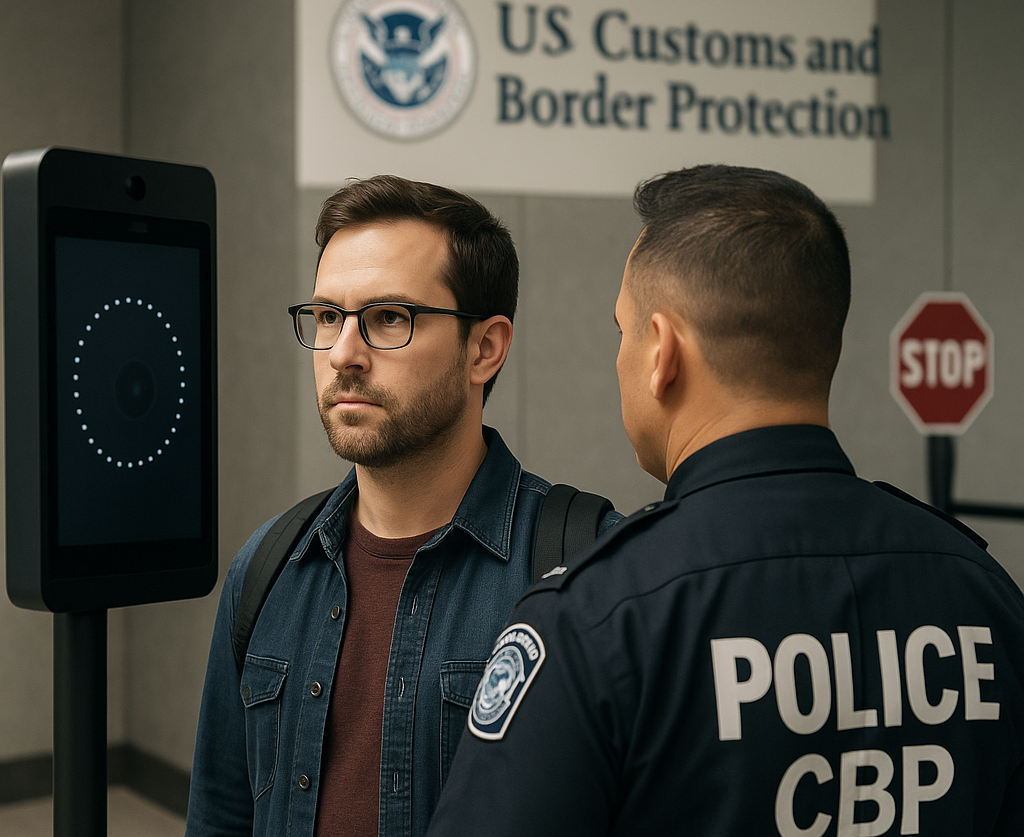
Starting December 26th, Canadians travelling to the United States by air, land, or sea will no longer be able to opt out of having their photo taken at the border. The new rule, announced by the Department of Homeland Security, will make facial biometrics mandatory for all non-US citizens when entering or exiting the country. The system is already being used at many airports, but is now being rolled out across all border points with full implementation expected by 2026. American officials claim the move will improve national security and speed up processing times, but many travellers see it as another step toward constant surveillance.
For a lot of Canadians, the idea of being photographed without consent feels invasive. Imagine lining up to board your flight home and suddenly having a uniformed officer snap your picture without warning or explanation. According to a CBC News story, that’s what happened recently to a Toronto man flying out of Cleveland who says it left him feeling shocked and violated. The real concern goes deeper, though. Photos of foreign nationals can reportedly be stored in a Homeland Security database for up to 75 years, and privacy experts warn that the United States has few real protections in place to stop this data from being shared or misused later on. Once the system exists, it’s easy for it to be used for other purposes.
This policy is straining an already uneasy relationship between Canada and the United States. Many Canadians have been avoiding America due to Trump’s “51st state” rhetoric, not to mention the fentanyl tariffs. Canada to USA tourism numbers have dropped sharply, and being photographed and tracked at the border could make even more Canadians think twice before visiting. To be fair, many Americans think Canada’s border policies are equally ridiculous, such as our practice of denying entry to visitors who have a past DUI.
This is not the only change at the US border that has caught many travellers off guard, earlier this year it was announced that Canadians who plan to spend more than a month in the United States are now required to register their stay with border authorities. The new registration process includes photographing and fingerprinting at land crossings, as part of an effort to better track the length of stay for foreign visitors. US officials say the policy helps ensure compliance with visa rules and enhances border security, but critics argue it treats long-term visitors like potential offenders rather than trusted neighbours. Many worry that this kind of data collection could eventually be linked with other biometric systems, creating a detailed profile of every Canadian who spends extended time south of the border.
What do you think… will these new policies make you less likely to travel south?
